

A Brief, Colorful History

Key West’s history reads more like a series of stories than a timeline: pirates, wreckers, cigar rollers, Navy pilots, writers, and characters you couldn’t invent if you tried. The island has shifted identities over the years, but it has always kept its sense of humor and its ability to reinvent itself while still staying unmistakably Key West.
Wreckers and cigar makers
The island first became known for wrecking: salvaging cargo from ships that ran aground on the reef. In the mid-1800s, Key West was a busy, prosperous port, thanks to the skilled wreckers who pulled valuable goods from the sea. The waterfront was wild and bustling, filled with sailors, merchants, and opportunists who shaped the island’s early character.
Then came the cigar era. Cuban cigar makers brought their craft to Key West in the late 1800s, filling the island with factories, hand-rollers, and a community that gave Key West a distinctly Cuban influence still felt today. This era brought prosperity, culture, and many of the island’s most important families.
Cuba: 90 miles away, woven into island life
Key West’s famous “90 miles to Cuba” marker celebrates a closeness that is cultural as well as geographic. Cuban families, cigar workers and political exiles helped shape the island’s businesses, language and community life.
Founded by Cuban exiles in 1871, the San Carlos Institute became a school, cultural center and gathering place for the independence movement. Cigar workers helped fund that cause, and José Martí brought rival exile groups together here in 1892.
In the early 1900s, people traveled back and forth between Cuba and Florida. The 1959 Cuban Revolution and the Cold War changed those connections, making migration more difficult and dangerous. Key West’s Cuban heritage remains part of everyday island life, not just a chapter in a history book.
Visit the San Carlos Institute at 516 Duval Street for a deeper look. San Carlos history · Library of Congress: crossing the straits · City’s Southernmost Buoy information
The hurricane that moved the cemetery
The October 11, 1846 hurricane devastated Key West and washed through the earlier cemetery near today’s Higgs Beach, disturbing graves. In 1847 the City established the cemetery inland in Old Town, on higher ground near Solares Hill. The City describes the site as 16 feet above sea level; that is ground elevation, not a measured storm-surge height.
Do not miss it when you explore the neighborhoods. You will find maritime history, family stories, memorials and epitaphs with a very Key West sense of humor. It remains an active cemetery, so enjoy it respectfully. Cemetery history and visitor information.
The Overseas Railway
In 1912, Henry Flagler connected Key West to the rest of the world with his Overseas Railway: an engineering miracle that lasted until the 1935 hurricane, which wiped out major sections of the line. The railroad changed the island forever, and when it was gone, the Keys continued forward with a highway built on its skeleton. Even today, you can feel that sense of isolation mixed with possibility that the railroad brought.
A Navy town
The Navy shaped much of modern Key West. Pilots, sailors, engineers, and their families built the backbone of the island’s mid-century population. The Navy brought stability, industry, and a whole new chapter of stories: from Cold War intelligence operations to training grounds for military aviators.
Writers, artists and island stories
Key West’s eccentric side grew alongside its military one. Artists, writers, and dreamers found a home here, including Ernest Hemingway, whose house still stands with its famously opinionated six-toed cats. Tennessee Williams wrote here. Jimmy Buffett played his early sets in bars that still operate today. Key West became a haven for creative souls, misfits, and anyone searching for a place that didn’t ask you to be anything other than yourself.
The cats deserve their own mention. The Hemingway Home traces part of its famous cat family to Snow White, a six-toed cat given to Hemingway by a ship’s captain. Cats also roam porches and gardens elsewhere around Key West, and you may spot extra toes beyond the museum walls. That does not make every island cat a documented Hemingway descendant. Some simply look as though they own the place—which, in their minds, they do. Meet the Hemingway cats.
The island also carries stories that lean toward the haunting and unusual: Robert the Doll, often called the most haunted doll in the world, and the Key West Lighthouse and its lore. The African Cemetery at Higgs Beach tells a different and deeply important story. It honors African people rescued from illegal slave ships in 1860 who later died in Key West.
Key West has burned, rebuilt, reinvented itself, and survived storms and eras that changed the rest of the country. Through all of it, the island maintained a spirit that feels equal parts resilience and mischief. It’s a place where history is still alive in the architecture, the stories, the people, and even the street corners.
The Conch Republic
Key West’s story wouldn’t be complete without its most famous act of rebellion: the formation of the Conch Republic. In 1982, when the U.S. Border Patrol set up a roadblock on the only highway into the Keys: slowing traffic to a crawl and hurting tourism: Key West fought back the only way Key West knows how: with humor, independence, and a little bit of chaos. In a symbolic protest, the city “seceded” from the United States, declared itself the Conch Republic, surrendered immediately, and then demanded foreign aid. It worked. The roadblock was lifted, and the legend stuck. Today, the Conch Republic represents the island’s playful personality and its desire to chart its own course.
Bahama Village
Another pillar of Key West’s history is Bahama Village, a community rooted in the heritage of Bahamian settlers who came to the island in the 1800s. Their families shaped the music, food, and culture still embedded in the neighborhood today. Bahama Village remains one of the most authentic parts of the island: colorful, historic, and filled with the kind of local legacy you can feel just by walking through it.
Two fires that reshaped the island
May 16, 1859: fire began near Front and Duval streets and devastated the waterfront business district. Jefferson B. Browne’s historical account describes Henry Mulrennon using gunpowder to destroy his own house and create a firebreak. That is a much more dramatic home-renovation story than most of us want.
April 1, 1886: an even larger fire broke out near the San Carlos Institute and burned for roughly 12 hours. It destroyed cigar factories, homes and warehouses across more than 50 acres. The steam fire engine was away in New York for repairs. Generations have repeated suspicions of arson tied to Cuban revolutionary politics; those suspicions should not be treated as a proven cause.
Rebuilding changed the streets you see today. Visit the Alex Vega Key West Firehouse Museum for the human stories and firefighting artifacts. Read Browne’s historical account.
Higgs Beach, the piers and remembrance
Add the Higgs Beach pier to a shoreline walk, and continue to the nearby Edward B. Knight Pier, often called White Street Pier. At its entrance, at White Street and Atlantic Boulevard, the Key West AIDS Memorial honors people lost to AIDS. Built with private funds and donated to the City in 1997, it reflects the grief, care and generosity that helped shape this community. Take a moment to read the names. About the memorial.
Duval Street and the sea
And then there's Duval Street, famous for being “the longest street in the world” because it stretches from the Atlantic Ocean to the Gulf of Mexico. Its personality has shape-shifted over time: from sailors and cigar rollers in the early days, to artists, authors, and musicians, to today’s blend of locals, tourists, and nightlife. No matter the era, Duval has always been the island’s main stage.
The sea has always been part of Key West’s identity. Countless shipwrecks near the reef brought treasure hunters, salvagers, and adventurers to these waters. Some found fortunes; others found stories that live on in museums and tales passed down through generations. The Shipwreck Museum and Mel Fisher’s treasure museum aren’t tourist gimmicks: they’re reminders of the island’s origins as a place where risk and reward always met at the shoreline.
An enduring island character
Through all of this, Key West became something rare: a small island with outsized history, deep cultural roots, strong preservation, and a community that refuses to lose its character. It has been a Navy town, a smuggler’s refuge, an artists’ colony, a cigar empire, a wrecking capital, and even its own “nation” for a day.
And despite all the changes over the centuries, Key West today still feels like the best parts of its past: creative, bold, endlessly welcoming to anyone who shows up ready to appreciate it.
Cruise Ships & the Island’s Future
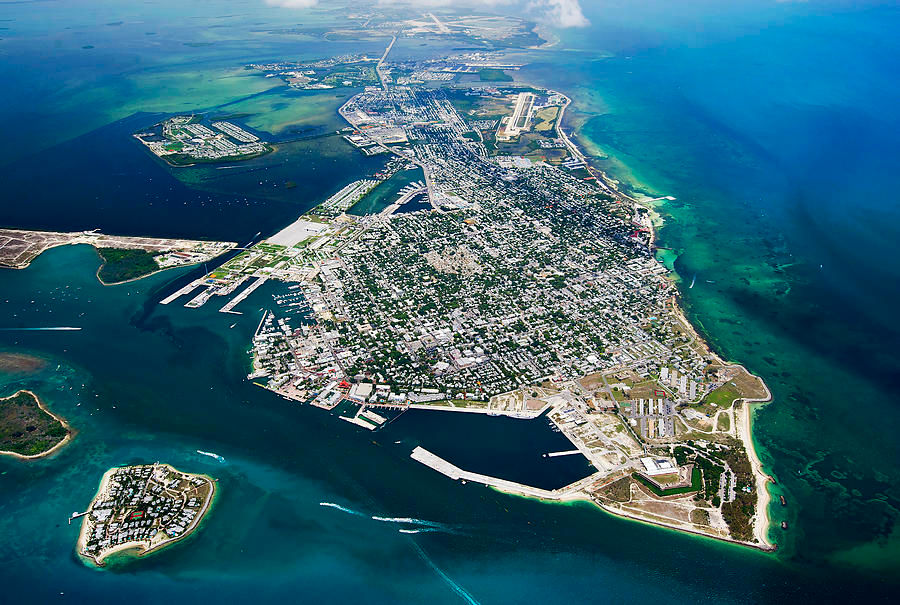
Key West has always had a complicated relationship with cruise ships. For decades they brought visitors, energy, and business to the island. But they also brought crowding, strain on infrastructure, and growing concern about the environmental impact on our shallow marine ecosystem.
One of the biggest concerns has been the water itself. Residents have raised concerns about large ships stirring up sediment and affecting water clarity and marine life. Protecting the water we rely on has been a major part of the debate.
A few years ago, residents voted overwhelmingly to limit ship size and daily passenger counts. The community wanted tourism that fit the island, not overwhelmed it, and they wanted protection for the water we rely on. The state later overturned those local measures, but the debate pushed the city to find new ways to manage cruise traffic.
The docks do not all operate under the same rules. The City controls Mallory Square, Pier B is privately owned, and the Navy controls the Outer Mole. In July 2026, the City adopted a one-ship policy and asked the Navy to cooperate voluntarily.
Even now, the balance isn’t perfect. That City policy does not guarantee only one ship will visit the whole island on a given day. Key West continues to debate how to protect its waters and manage cruise tourism on a scale that makes sense for a small island.
For buyers
Cruise-ship traffic can affect how busy downtown feels. Visit the neighborhoods you’re considering at different times so you get a feel for their daily rhythm.